TDEE Calculator
Free TDEE calculator: BMR (Mifflin-St Jeor) × activity level, with weight-loss and weight-gain targets. Instant, private, no signup.
Mifflin-St Jeor equation (published, peer-reviewed) × activity multiplier — computed entirely in your browser. An estimate, not medical advice.
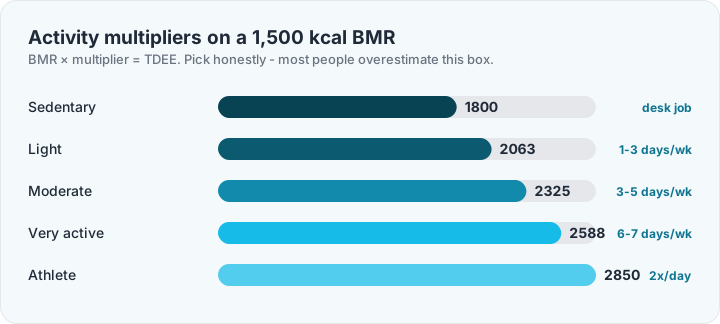
TDEE — Total Daily Energy Expenditure — is the number of calories your body burns in 24 hours, including exercise, digestion and thinking about lunch. Eat at TDEE and your weight holds; eat below it and you lose; eat above and you gain. Every calorie target any app has ever given you is derived from this number.
The calculation has two parts. BMR (basal metabolic rate) is what your body burns at complete rest — we use the Mifflin-St Jeor equation, the formula the American Dietetic Association found most reliable for most people. Activity multiplies BMR by a factor from 1.2 (desk job, no exercise) to 1.9 (manual labor plus training). The honest-input problem lives entirely in that second step: studies consistently find people overreport exercise, which is why our default suggestion is to pick the lower multiplier when torn.
What the calculator cannot see: genetics, medications (some affect metabolism meaningfully), muscle mass (the formula assumes average composition), and adaptive thermogenesis — the metabolic slowdown that comes with prolonged dieting. Treat the output as a starting hypothesis: eat at the computed maintenance for two weeks, watch the scale trend, and adjust by 100-200 kcal based on what your body actually does. The number starts the conversation; your data finishes it.
Frequently asked questions
How accurate is a TDEE calculator?
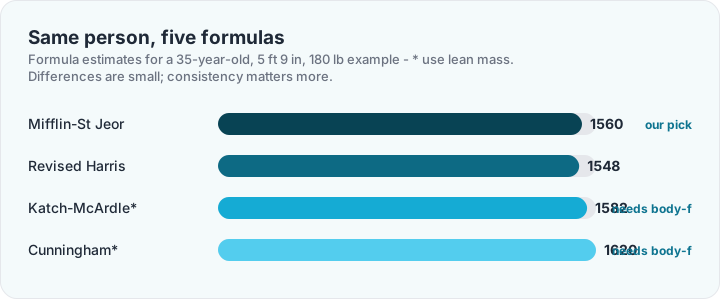
Within roughly ±10% for most people at maintenance — Mifflin-St Jeor is the best population formula without lab testing. Validate against two weeks of scale data and adjust.
What should my TDEE be to lose weight?
TDEE is maintenance, not loss — subtract a deficit from it. Our deficit calculator picks a sustainable pace; 500 kcal/day below TDEE is the classic one-pound-a-week starting point.
Why does my app show a different number?
Different default formulas, different activity assumptions, and apps that round targets for engagement. The formula is public — this calculator shows the raw math.
Should I eat back exercise calories?
If your activity multiplier already assumes regular exercise, no — that is double-counting. Log exercise you did NOT include in the multiplier.