Best Macro Tracking Apps
Best macro tracking apps compared: Cronometer vs MyFitnessPal vs Lose It! vs MacrosFirst — macro views, databases and free tiers.
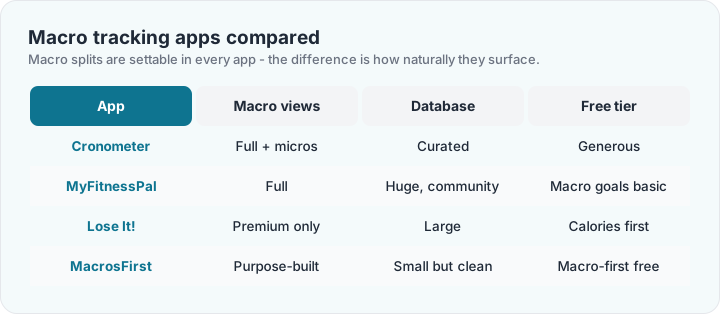
Macro tracking adds three numbers to the calorie diary — protein, carbohydrate and fat — and the apps split sharply on whether those numbers are front-and-center or an upsell. For flexible dieting ("if it fits your macros"), the macro view IS the product; for plain weight loss, it is a nice-to-have.
The honest ranking for macro-first users: Cronometer leads — full macro and micronutrient views on the free tier with curated data, which matters when protein accuracy drives your plan. MacrosFirst is the purpose-built newcomer: macro-optimized interface, small but clean database, free macro tracking as the core promise. MyFitnessPal handles macros fine (goals settable, views complete) but hides its best reporting behind Premium. Lose It! treats macros as a Premium feature — fine for calorie-first users, wrong for macro-first ones.
A protein note that survives any app choice: the target matters more than the tracking. Roughly 0.7-1 g per pound of goal body weight is the evidence-anchored range for preserving muscle in a deficit; every app on this page will show you how close you got, and only the free ones will show you for free.
Frequently asked questions
What is the best app to track macros?
Cronometer for data accuracy plus free macro/micronutrient views; MacrosFirst if you want the interface built around macros specifically. MyFitnessPal works but reserves its best reporting for Premium.
Do I need Premium to track macros?
Not on Cronometer, MacrosFirst, or MyFitnessPal (goals and views exist free there — reports are paid). Lose It! reserves detailed macro views for Premium.
What percentage of calories should be protein?
Common evidence-anchored ranges run 25-35% of calories in a deficit, or 0.7-1 g per pound of goal body weight — set it as a gram target, not just a percentage.
Do macro trackers work without weighing food?
Roughly — cup and piece estimates carry real error, and macros are less forgiving than calories at precision levels. A $20 food scale is the highest-ROI purchase in macro tracking; every app on this page accepts gram entries.
Is Cronometer good for keto macros?
Yes — net-carb targets, electrolyte-relevant micronutrients (sodium, potassium, magnesium) and curated whole-food entries are exactly what keto tracking needs.
What is the best macro split for weight loss?
Evidence-anchored starting point: protein anchored first (~0.7 g per pound of goal weight), fat 25-35% of calories, carbs filling the rest — then adjust by hunger and performance, not by internet ideology.
Do I need a food scale for macro tracking?
For serious macro goals, yes — cup estimates carry 20-40% error and macros are narrower targets than calories. Two weeks of weighing calibrates your eyeballs for life, which is the real payoff.
Should I track fiber too?
Fiber is the quiet hero: 25-38 g a day correlates with satiety and health outcomes, and Cronometer shows it free. If protein is the floor and fiber is the ceiling, the carbs and fats sort themselves out for most people.